

The Alcohol, Drug and Mental Health Board of Franklin County (ADAMH) plays a vital role in strengthening the local behavioral health system, not only by funding programs and services, but also by working side by side with ADAMH network providers to design and grow innovative initiatives.
A key focus of ADAMH’s efforts is supporting and expanding the behavioral health workforce, as exemplified by the Peer Recovery Supporter (PRS) Internship Program, which was shaped with critical input from ADAMH.
Hosted by Mental Health America of Ohio (MHAOhio), the PRS Internship Program offers relevant, hands-on experience to newly certified peers. PRS interns learn to apply the skills and knowledge of PRS core competencies by completing 200 hours of work experience over three to six months.
Certified Peer Recovery Supporters — often called “peers”— are individuals who use their own lived experience with mental health or substance use recovery to support others on their recovery journeys. The serve as an essential part of the behavioral health workforce by bridging gaps between treatment and recovery, reducing stigma and helping individuals feel seen, understood and empowered to take the next steps in their healing process.
“This program was developed because we wanted to set the peers up for as much success as possible with a clear understanding of what jobs in peer support are like when it comes to community behavioral health settings,” said Maggie Hallett, Associate Director of MHAOhio.
Launched in fall 2024, the program has already graduated nine interns, with three more participants currently in the training. The interns – who are paid – are placed across three ADAMH network providers: Maryhaven, CompDrug and Southeast Healthcare.
“Host sites tell us that interns are a welcomed addition, bringing excitement into the workplace,” said Tori Ivan, PRS Program Director. “Supervisors are finding that, because of this program, they have a better understanding of peer support and what it's supposed to be – and having extra hands without needing to come up with the funding has been helpful.”
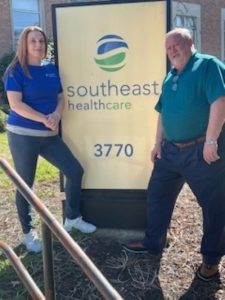
Jesse Roberts, Vocational Programs Manager at Southeast Healthcare, echoes Tori’s sentiment.
“I think having peers here, both our own and the interns, has given us a wider spotlight for people to see what peers can do,” he said. “Some of our own staff, while they often deal with people in crisis, don’t realize what recovery might look like, so we’re destigmatizing that journey by bringing in peers.”
Since the internship launched, Jesse has mentored three PRS interns at Southeast and is currently mentoring Tiffany Robertson, the agency’s newest PRS intern. Tiffany shared that she’s been able to take on a variety of peer support responsibilities — from welcoming visitors in the lobby and working one-on-one with clients to leading both women’s and men’s group meetings.
“It’s been a blessing to do this work,” she said. “It makes me feel like the things I've gone through mattered, and by sharing that with other people, I know it gives hope.”
MHAOhio’s data evaluation from the program has shown that 87% of interns who have completed the program state that they feel better prepared to enter the workforce than they did prior, and 100% of interns state that they would recommend this program to other peer recovery supporters.
Building on that success, House of Hope for Recovery will soon join as a host site, expanding the program’s reach and creating even more opportunities for interns to gain hands-on experience.
“We're so excited for another host site to be added on,” Tori said. “The more host sites that we add, the more people we can serve, not only in number, but in experience, too.”
Although Tiffany is still early in her journey as a certified PRS, she’s developed a deep appreciation for the field and feels honored to play a role in its growth.
“It’s amazing that peer recovery supporters are recognized and valuable, because I think they’re going to help a lot of people,” Tiffany said. “Peer recovery services are very important. I wish that it was more available when I was getting help, but to know that it is now is just so encouraging.”